Swine Haptoglobin ELISA Kit

$407.00

Catalog Number: EPH2003-1

This assay employs a quantitative enzyme immunoassay technique that measures the specified antigen in samples.
Product Size:96 Well Plate

Catalog Number. EPH2003-1 Categories: , , Tags: , , , , , Brand:

Additional information

Format

Sandwich ELISA

Entrez Gene

397061

Components

Biotinylated Swine Haptoglobin Antibody, Chromogen Substrate (1x), MIX Diluent Concentrate (10x), Sealing Tapes, SP Conjugate (100x), Stop Solution (1x), Swine Haptoglobin Microplate, Swine Haptoglobin Standard, Wash Buffer Concentrate (20x)

TIme

4 hours

Sensitivity

0.51 ng/ml

Range

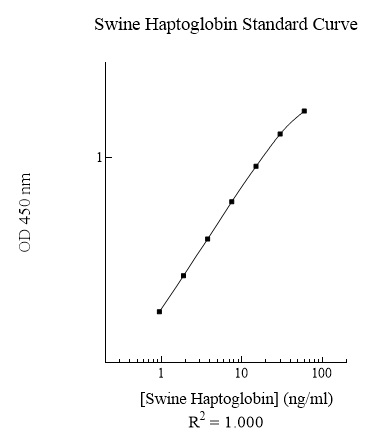
0.938 – 60 ng/ml

Samples Type

Plasma, Serum, Urine

Associated Disease

Cardiac

Species

Swine

UniProt

Q8SPS7

Storage

Refer to component labels for details

Plex

1

Usage

For Research Use Only, Not To Be Used For Diagnostic Purposes

Documentation

Publications (4 results)

Please use discretion when following external links; Assaypro cannot guarantee the validity and security of all citation links provided.

Alterations in oxidant/antioxidant balance, high-mobility group box 1 protein and acute phase response in cross-bred suckling piglets suffering from rotaviral enteritis

  • https://link.springer.com/article/10.1007/s11250-014-0616-3
  • U Kumar De, R Mukherjee, S Nandi, BHM Patel… - Tropical animal health …, 2014 - Springer
  • … Hp was measured using Assay Max Swine Haptoglobin ELISA kit as per the manufacturers’ instructions (cat # EPH2003-1, Assaypro, Swine Haptoglobin ELISA kit, Minneapolis, MN, …

* Verso LL et al. (2021) The administration of diets contaminated with low to intermediate doses of deoxynivalenol and supplemented with antioxidants and binding agents slightly affects the growth, antioxidant status, and vaccine response in weanling pigs. J Anim Sci. 99(9):skab238.

* De UK et al. (2014) Alterations in oxidant/antioxidant balance, high-mobility group box 1 protein and acute phase response in cross-bred suckling piglets suffering from rotaviral enteritis. Trop Anim Health Prod. 46(7):1127-33.

Loading data...